The Science of Seaweeds
Marine macroalgae are among the most ecologically significant organisms on the planet. This section covers their ecological functions, the threats they face, conservation principles, and the scientific techniques used to study them.
What Seaweeds Do for the Ocean
Primary Producers
Seaweeds convert sunlight into energy through photosynthesis, forming the base of the marine food web and supporting organisms from microscopic plankton to large marine mammals.
Habitat Formation
Kelp forests create complex three-dimensional habitats providing shelter, breeding grounds, and feeding areas for fish, invertebrates, and marine mammals. Bull Kelp forests off Howe Sound are a prime example.
Nutrient Cycling
Seaweeds absorb nitrogen and phosphorus from the water column, preventing eutrophication and maintaining water quality. They play a critical role in the cycling of nutrients through coastal ecosystems.
Carbon Sequestration
Large brown algae like Sugar Kelp (Saccharina latissima) and Bull Kelp absorb CO₂ during photosynthesis, storing carbon in their biomass and underlying sediments — a natural climate mitigation mechanism.
Shoreline Protection
Species such as Rockweed (Fucus distichus) and eelgrass anchor to substrates, reducing wave energy and preventing coastal erosion — particularly important as sea levels rise.
Biodiversity Support
Seaweed beds host extraordinary biodiversity. A single kelp frond can support dozens of invertebrate species, microorganisms, and epiphytic algae — making them keystone structures in coastal ecosystems.
What's Inside Saccharina kelp
Saccharina latissima (Sugar Kelp) is exceptionally rich in bioactive compounds. When fermented, these compounds become more bioavailable — making fermented kelp extract a powerful biostimulant for agriculture.
DW = Dry Weight basis
Threats to Seaweed Habitats
Climate Change
Rising ocean temperatures, acidification, and changing sea levels alter seaweed distribution and survival. Warmer waters shift species ranges northward, while acidification affects calcified algae.
Pollution
Chemical pollutants, heavy metals, and plastic debris harm seaweed populations. Nutrient pollution from agricultural runoff triggers harmful algal blooms that outcompete native seaweeds.
Overexploitation
Unsustainable collection depletes populations and disrupts marine ecosystems. Certain species used for food, cosmetics, and industrial purposes are particularly vulnerable.
Invasive Species
Non-native species introduced through ballast water and aquaculture outcompete native seaweeds. Dead Man's Fingers (Codium fragile) is a notable invasive on the BC coast.
Habitat Destruction
Coastal development, dredging, and human activities destroy intertidal and subtidal zones, reducing available habitat for seaweed growth and associated marine life.
Sea Urchin Barrens
Without predators, sea urchin populations explode and graze kelp forests to bare rock — creating 'urchin barrens.' Restoration of predator populations is key to kelp recovery.
What Can Be Done
Marine Protected Areas
Establishing MPAs protects critical seaweed habitats from overexploitation, pollution, and habitat destruction.
Sustainable Collection
Limiting collection amounts, avoiding reproductive periods, and using non-destructive methods keeps populations healthy.
Restoration Projects
Kelp transplanting, invasive species removal, and water quality improvement can rehabilitate degraded habitats.
Pollution Control
Reducing agricultural runoff, improving wastewater treatment, and managing coastal development protects water quality.
Research & Monitoring
Long-term ecological monitoring and citizen science programs track population health and inform adaptive management.
Public Education
Raising awareness about seaweed ecology and threats encourages sustainable practices and community stewardship.
Ethics & Ecology in the Field
- —Check tide schedules — the intertidal zone is dangerous when the tide comes in
- —Wear sturdy, non-slip footwear on slippery rocks
- —Check weather forecasts before heading out
- —Bring sun protection and adequate water
- —Only collect what you need — never deplete entire populations from one area
- —Leave enough seaweed for regeneration and dependent marine creatures
- —Use scissors or a knife to cut, rather than pulling, to minimize damage
- —Rinse gear before and after trips to prevent spread of invasive species
- —Follow local regulations — some areas and species are protected
- —Seek permission on private or Indigenous land
- —Respect traditional customs and practices around seaweed use
- —Use collections for educational and research purposes where possible

Identifying Seaweed Species
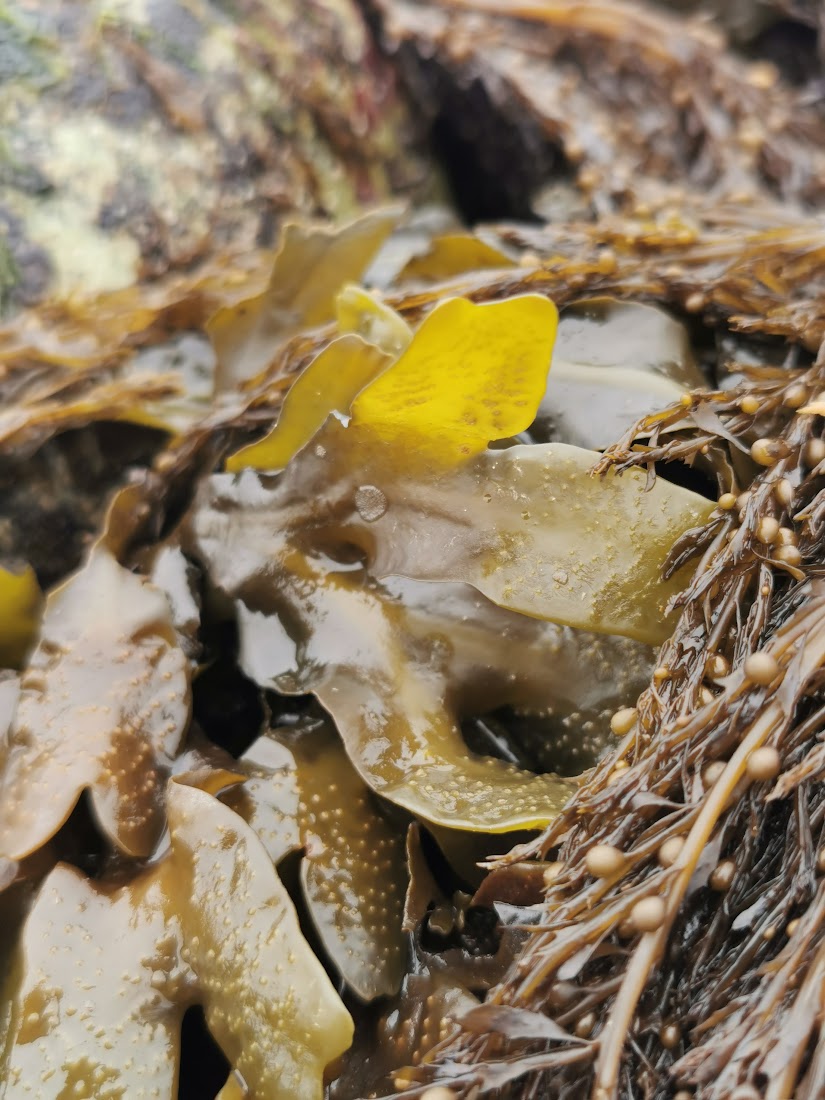
Examining physical characteristics: thallus shape, branching patterns, texture, air bladders, holdfasts, and reproductive structures.
Noting tidal zone (high, mid, low, subtidal), substrate type (rock, sand, mud), and exposure level significantly narrows identification.
Using a standardized short DNA region (typically rbcL or COI) to identify species with molecular precision — particularly useful for cryptic species.
Community-based monitoring programs like iNaturalist allow non-specialists to contribute observations, building large-scale distribution datasets.